
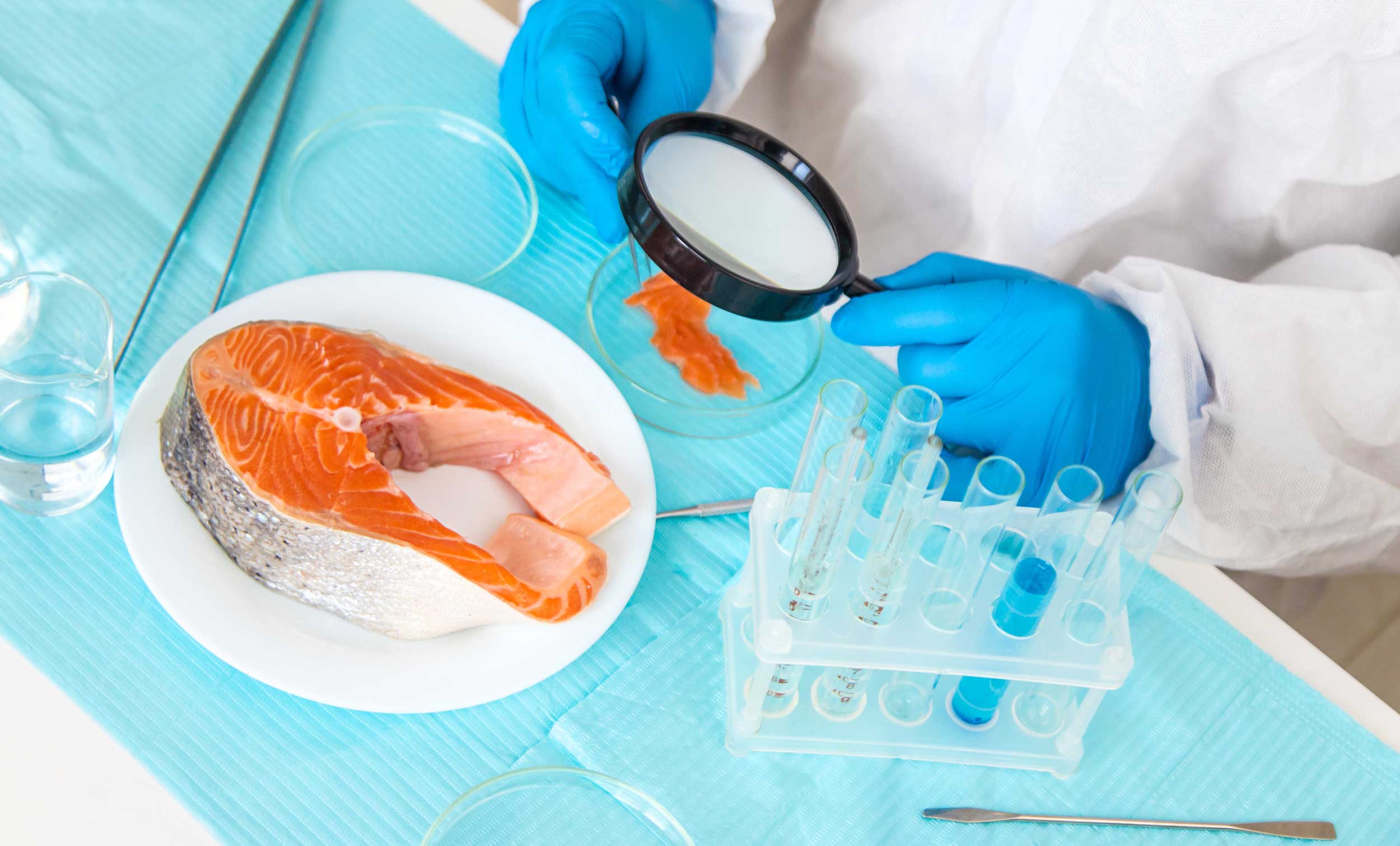
Shelf-life testing for food products evaluates selected characteristics over time under defined conditions. A useful study begins with the product, package, storage assumptions, measurements, and decision criteria—not simply a target date printed on a label.
For a manufacturer planning a launch or a packaging change, an early conversation with the laboratory can clarify what the study will measure and when the evidence will be available.
Routine testing and shelf-life studies serve different purposes
A routine microbiological test describes the submitted sample at the time examined. A shelf-life study uses planned intervals to follow the product over time. Depending on the question, the work may involve microbial measurements, product characteristics, or a combination agreed with the laboratory.
A single passing result at the start does not show how a product will perform throughout storage. Food Standards Scotland’s shelf-life guidance explains why product-specific factors matter. Its technical discussion is useful background; requirements for your market must be considered separately.
Define the product and final package
Describe the formulation, processing stage, package material, closure, and intended storage. If you are comparing two packages or formulas, identify the comparison at the outset. A study should make clear which version of the product its results describe.
Share previous results, known quality concerns, and any customer specifications. For example, a team evaluating a packaging change may need to understand a different question from a team investigating a short shelf life on an existing line.
Agree on the study conditions and schedule
Talk through storage conditions, the proposed study length, and the points when samples will be examined. Conditions should reflect the study’s purpose and the expected distribution and use of the product. The Canadian Food Inspection Agency’s shelf-life planning resource illustrates the importance of realistic conditions, planned sample intervals, and documented criteria.
Ask how many unopened units are needed for the full plan, including each time point and any agreed repeats. Confirm who will store the samples and how storage will be documented. Do not assume a laboratory can shorten a real-time study to meet a launch deadline.
Decide how your team will evaluate the data
- Measurements: Which analyses answer the product question?
- Criteria: What specifications or decision limits will your team use?
- Reporting: Will results be provided at each interval, at the end, or both?
- Changes: How will unexpected results or a revised product be handled?
- Timing: Which decisions can be made before the full study finishes?
Document those agreements before the first sample enters the study. A clear plan makes it easier to compare results without changing the question midway through the work.
Common shelf-life questions
Is shelf-life testing the same as a challenge study?
No. A challenge study intentionally evaluates a defined microbial challenge under a specific protocol. Ask the lab which type of study fits your question and which work is available for your product.
Can results be carried over to a different formula?
A formula, process, or package change may affect the assumptions behind the original study. Review the change before applying existing results to a new version.
Discuss your study with Daane Labs
Daane Labs’ shelf-life and stability testing team can discuss analyses and a schedule for your food, beverage, or supplement project. Based in Naples, Florida, the lab works with manufacturers nationwide. Send your product and packaging details or call 239-227-4735 to confirm scope, sample requirements, and pricing.
Related Quality Control articles

Dietary Supplement Microbial Testing: A Planning Guide for Brands